
Beyond the Classroom: Equipping Nurse Educators with Next-Gen Medical Technology
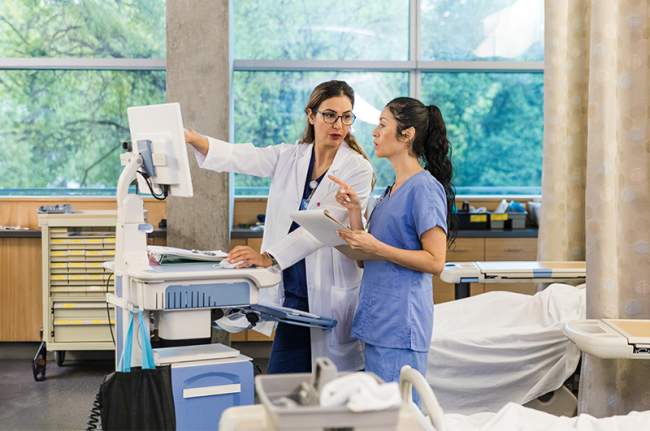

In a simulation lab at Southeastern Louisiana University (SELU), nursing students race against the clock, grappling with the beeping monitors and the simulated cries of a patient in distress. Engaged in the learning process, they work to decipher electronic health records, administer the correct medication dosage, and utilize virtual consultation tools, their every move observed by faculty. This isn't just a training exercise; it's a microcosm of the modern hospital, where technological proficiency can mean the difference between life and death.
Indeed, simulation labs—mixed-reality training facilities that combine the classroom and the exam room—are a crucible where future healthcare professionals are forged. Students like those at SELU face not only the traditional pressures of mastering clinical skills, but also the added complexity of navigating an increasingly digitized medical world. Where once a basic understanding of power buttons, passwords, and how to troubleshoot a paper jam were considered sufficient competence, today's medical professionals must layer a far more sophisticated set of digital skills on top of complex care knowledge sets. They must navigate web-like electronic health record (EHR) systems, operate secured medication dispensing cabinets, conduct virtual consultations via telehealth platforms, and utilize a growing array of handheld diagnostic tools. For educators, the challenge lies in effectively weaving this technological training into an already demanding curriculum.
The goal is to make the experience “as close to what they're going to be doing in the hospital as we can possibly make it,” says Duane Whitecotton, RN, Simulation Coordinator at Southeastern Louisiana University’s College of Nursing and Health Sciences. And that’s no small feat. “Electronic health records were not a part of simulation” when Whitecotton began his career as a bedside nurse over two decades ago. “Medication dispensing cabinets were not a part of simulation.”
Fortunately, when it comes to training the next generation of healthcare workers on increasingly complex equipment, the medical technology industry isn’t leaving educators to their own devices. Some companies are partnering directly with academic institutions to bridge the training gap. These collaborations range from donating cutting-edge equipment for simulation labs to sponsoring real-world clinical experiences for students.
Odessa, Fla.-based medical device manufacturer and distributor TouchPoint Medical is one such example. In Q4 of 2024 alone, TouchPoint Medical donated medical carts and supply cart attachments to critical healthcare training institutions like Pasco County and Pinellas County Schools, enabling students and healthcare professionals to replicate real-world workflows. Equipment donations such as these not only provide students hands-on experience with the exact technology they can expect to encounter in critical care settings, but also address the needs of resource-constrained nonprofit institutions.
Amy Sue Ponce, MSN, RN, Supervisor of School Health in Pasco County, vouches for the value of industry involvement. “We don't have the funds or the means to give...these extra components to our staff to ease their workflows. So, [TouchPoint Medical] has been instrumental in that.”
Whitecotton agrees. Partnerships with companies like TouchPoint Medical help ensure that students are training on equipment that is “either similar or identical to what they're using at the bedside.”

Medication errors cause approximately one death daily and injure 1.3 million people annually in the U.S., according to the Washington State Nurses Association. Among the top causes for error? Inadequate training.
In light of such sobering statistics, institutions such as the Eleanor Mann School of Nursing are prioritizing the integration of technologies designed to mitigate errors and enhance efficiency, replicating the equipment students will encounter in real-world clinical settings. "In our simulations," says Clinical Instructor and Simulation Coordinator Emily L. Offenbacker, MSN, RNC-NIC CNE, "we make a concerted effort to replicate the clinical environments and equipment that students will encounter during their actual hospital rotations".
This emphasis on real-world application has driven the adoption of several key technologies in healthcare education.
Medication Dispensing Systems, for example, are automated systems with multiple key benefits. They are designed to provide medication traceability, implement access control to prevent diversion, and help address root causes of preventable harm in healthcare settings. These systems are now a core component of simulation labs like those at SELU, providing nursing students with hands-on experience with a technology they will use daily in their careers. Whitecotton emphasizes their transformative impact: “We were able to add that equipment and there's some expense that goes along with that, but it certainly did make a big difference to try to make it realistic for them.”
Electronic Health Records (EHRs) have become another cornerstone of modern healthcare, fundamentally changing how patient data is stored, communication occurs among providers, and clinical decisions are made. A 2021 study published in the Journal of the American Medical Informatics Association revealed the widespread adoption of this technology, with 86% of office-based physicians and 98% of hospitals in the U.S. utilizing certified EHR systems.
In light of the increasing importance of EHRs, educators like Siddhesh Pradeep Muley, BSN, RN who oversees health science programs in Pasco County, are emphasizing the need for students to develop proficiency in their use. Muley highlights how tools like medical carts—referred to colloquially as "Rovers" and donated by companies like TouchPoint Medical—can be integrated into EHR training to simulate real-world workflows. "This lets them put all their stuff on the Rover and take it into a patient's room," he explains. This approach helps students understand how to translate patient data within the EHR into effective care at the bedside.
Indeed, Medical Carts allow healthcare providers to efficiently transport medications, supplies, and technology to the patient's bedside. TouchPoint Medical's donation of medical carts has been particularly impactful, enabling both students and practicing nurses to improve their workflow and documentation practices. Ponce observes that the carts have “provided an opportunity for them to…put the laptop on, and…go. We've seen an increase in documentation and being able to do that because it's hands-on. It's right there.”
Finally, Simulation Mannequins have become a mainstay in healthcare education, with high-fidelity models able to mimic a wide range of patient conditions. These mannequins allow students to practice critical skills, such as administering medication or responding to emergencies, in a safe and controlled environment. Offenbacker explains how they are used in her program: “Through our simulations, we offer students more hands-on experience with pediatric patients, allowing them to perform assessments and procedures independently using high-fidelity pediatric mannequins.”
The integration of technology and industry partnerships is already yielding tangible results and transforming healthcare education and practice. One of the most significant outcomes is the enhanced realism of training environments. Simulation labs equipped with industry-standard tools, such as TouchPoint Medical's medication cabinets and mobile carts, provide students with a more accurate representation of the clinical settings they will encounter in their careers. This, in turn, better prepares them for the challenges of real-world practice, boosting their confidence and competence.
Beyond the simulation lab, the impact of these technologies extends to improved efficiency and workflow in actual healthcare settings. For practicing healthcare professionals, especially in resource-constrained environments, access to modern equipment can significantly streamline their daily tasks. Ponce notes that donated medical carts have "provided an opportunity" for her staff to enhance their documentation processes by having technology readily available, ultimately "easing the workflow".
Integrating TouchPoint Medical's medDispense® units into Rasmussen University’s simulation labs also enhanced the nursing program’s practical training modules and student experience. TouchPoint Medical's advanced medication dispensing units provided students with hands-on experience in a realistic clinical setting, allowing them to practice essential skills such as medication verification, barcode scanning, and safe administration techniques.
“The new medDispense® units from TouchPoint Medical have significantly enhanced our simulation labs by accurately replicating the medication-dispensing process found in acute care settings,” says Heather Smith, MSN, RN, Area Dean of Nursing and Nurse Administrator at Rasmussen’s Ocala Nursing Program. “We’re able to offer students realistic, hands-on training that mirrors clinical experiences…equipping them with the skills they need to excel in real patient care settings.”
Importantly, emphasis on technology in healthcare education contributes to increased accuracy and safety in patient care. Medication dispensing systems, for example, are designed to reduce medication errors, a leading cause of preventable harm in healthcare settings. By providing students with hands-on training on these systems, educators are instilling safe practices and fostering a culture of patient safety from the outset of their careers.
Finally, the versatility and adaptability of much of the donated equipment further amplify its impact. Medical carts, for instance, can be seamlessly integrated into various learning environments, from simulation and skills labs to actual school clinics, enhancing documentation and patient care across the board.
Medical technology is transforming the classroom, providing students with realistic, hands-on learning experiences that prepare them for successful careers in healthcare. By investing in and effectively utilizing these technologies, educational institutions can ensure that their graduates are well-equipped to meet the evolving demands of the healthcare industry and provide high-quality patient care.
Are you a representative from the medical device industry? Medical training facilities and nonprofit institutions need your help preparing the next generation of the healthcare workforce. To inquire about donating medical equipment or supplies, or sponsoring trainings, please contact:
Pasco County School District
Amy Sue Ponce, MSN, RN
School Health Supervisor at District School Board of Pasco County,
[email protected]
Siddhesh Pradeep Muley, BSN, RN
Program Specialist for Career, Technical, and Adult Education
[email protected]
Rasmussen University Ocala Nursing Program
Kate Lindley, MSN, RN, CHSOS, CHSE
National Simulation Director
[email protected]
Southeastern Louisiana University (SELU) College of Nursing and Health Sciences
Duane Whitecotton, RN
Simulation and Technology Coordinator
[email protected]
University of Arkansas Eleanor Mann School of Nursing
Emily L. Offenbacker, MSN, RNC-NIC CNE
Clinical Instructor and Simulation Coordinator
[email protected]
